
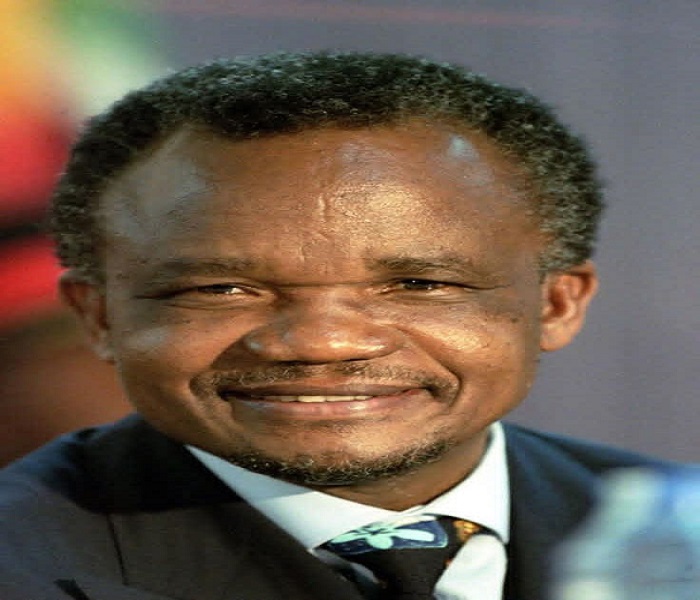
Frederick Jacob Titus Chiluba (1943–2011) was a Zambian trade unionist, political reformer, and the second President of Zambia. Born in Kitwe and raised in the Copperbelt region, Chiluba worked his way up from a bus conductor and accounts clerk to become one of the country’s most influential labor leaders. His eloquence, organizational skill, and advocacy for workers’ rights propelled him to the presidency of the Zambia Congress of Trade Unions (ZCTU).
As Zambia faced deep economic challenges and rising public dissatisfaction with one-party rule under Kenneth Kaunda, Chiluba emerged as a central figure in the movement for political change. In 1990, he helped found the Movement for Multi-party Democracy (MMD), a broad coalition advocating democratic reforms. In 1991, following the reintroduction of multiparty elections, Chiluba won a decisive victory and became president.
During his two terms (1991–2002), Chiluba implemented wide-ranging economic liberalization, including privatization of state-owned enterprises. His administration is credited with expanding political freedoms and reducing the dominance of state control over the economy, though these reforms also led to social and economic challenges for many Zambians. His presidency later faced controversy, including allegations of corruption, though he was ultimately acquitted by Zambian courts.
After leaving office, Chiluba largely withdrew from public life until his death on June 18, 2011. He remains a significant figure in Zambia’s transition to multiparty democracy and a key actor in shaping the nation’s political landscape during the 1990s.

𝐅𝐫𝐞𝐝𝐞𝐫𝐢𝐜𝐤 𝐂𝐡𝐢𝐥𝐮𝐛𝐚: 𝐀 𝐁𝐫𝐢𝐞𝐟 𝐁𝐢𝐨𝐠𝐫𝐚𝐩𝐡𝐲 added by Editor on
View all posts by Editor →