
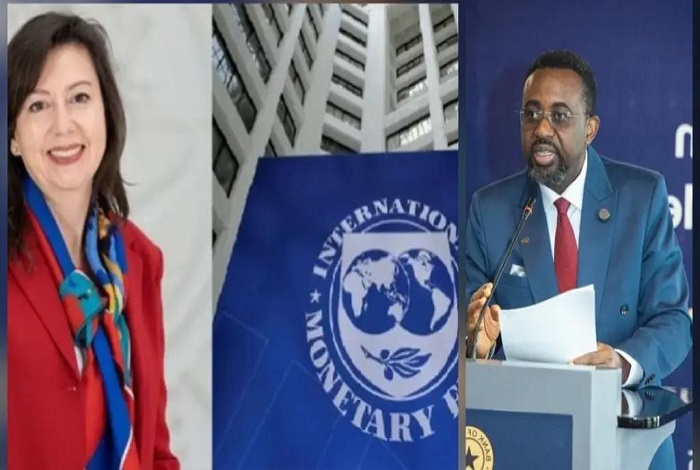
Ghana’s international reserves are approaching $13 billion as the International Monetary Fund (IMF) commended policy reforms that have strengthened economic stability and restored confidence.
In its latest country report, the IMF said Ghana has recorded “significant macroeconomic progress,” pointing to stronger growth, faster-than-expected disinflation, and a steady build-up of international reserves.
The Fund noted that these gains follow decisive measures taken to realign the programme after policy reform challenges in 2024.
Tentative data from the Bank of Ghana show that international reserves could exceed US$13 billion by the end of 2025, a development the IMF said reflects rising confidence in the economy.
“The macroeconomic environment has improved markedly,” the Fund stated, citing better policy coordination and tighter macroeconomic management.
Real GDP growth has exceeded programme expectations, while inflation has fallen into the central bank’s target range more quickly than projected.
The BoG said the IMF assessment “signals that the stabilisation agenda is beginning to deliver tangible results for the broader economy.”
The IMF also reviewed the Domestic Gold Purchase Programme, acknowledging financial risks but recognising its contribution to reserve accumulation and currency stability.
The programme, the Fund noted, has enabled Ghana to access foreign exchange without contracting new debt, while integrating gold inflows from the small-scale mining sector into the formal market.
Responding to public claims about losses from gold operations, the Bank of Ghana cautioned against drawing conclusions ahead of its annual external audit.
“Any figures being quoted in relation to losses from gold operations in 2025 are speculative,” the central bank said, adding that audited financial statements will be published next year in line with statutory requirements.
The Fund further welcomed reforms to Ghana’s foreign exchange operations framework, describing it as consistent with global best practices.
The framework clarifies intervention triggers, separates reserve accumulation from market activity and enhances transparency in the FX market.
The Bank of Ghana said additional reforms to improve pricing and operational efficiency in the gold purchase programme will begin in January 2026.
“These measures will strengthen sustainability and deliver broader benefits to the economy,” the Bank said.
The IMF stressed that maintaining policy discipline and oversight will be key to preserving the stabilization gains already achieved.

Ghana’s reserves near $13bn as IMF applauds economic stabilization added by Editor on
View all posts by Editor →